
Brandon Lee remains one of the most talked-about names in action cinema, remembered both for his talent and for the tragedy that cut his life short. Born into the shadow of a legendary father, Brandon Thomas Lee carved his own path in Hollywood before his death during the filming of The Crow shocked the industry and changed on-set safety forever.
Biography Table
| Field | Details |
|---|---|
| Full Name | Brandon Bruce Lee |
| Date of Birth | February 1, 1965 |
| Place of Birth | Oakland, California |
| Date of Death | March 31, 1993 |
| Age | 28 |
| Nationality | American |
| Ethnicity | Chinese, Swedish, and German ancestry |
| Profession/Occupation | Actor, martial artist |
| Years Active | 1986–1993 |
| Education | Chadwick School; Miraleste High School; Emerson College |
| Genre/Field | Action, martial arts films |
| Dating/Relationship Status | Engaged to Eliza Hutton at the time of death |
| Parents | Bruce Lee, Linda Lee Cadwell |
| Siblings | Shannon Lee |
| Notable Works | The Crow, Rapid Fire, Showdown in Little Tokyo, Legacy of Rage |
Early Life and Childhood
Brandon Lee was born at East Oakland Hospital, the eldest child of Bruce Lee and Linda Lee Cadwell. As the son of the world’s most famous martial artist, expectations followed him from birth, yet his early years were shaped more by family upheaval than by fame.
When Brandon was eight years old, his father died suddenly in Hong Kong under circumstances later linked to cerebral edema. Losing his father that young left a mark on him, and the family soon moved back to California, where his grandmother, Grace Ho, helped raise him alongside his mother and younger sister, Shannon.
Even as a child, Brandon trained in martial arts, reportedly able to kick through an inch-thick board by age nine, guided by his father’s own students, Dan Inosanto, Richard Bustillo, and Jeff Imada. Growing up surrounded by his father’s photos and legacy made it hard for him to separate his own identity from Bruce Lee’s shadow.
His teenage years were rockier. Brandon attended Chadwick School but was expelled four months before graduation, then dropped out of Miraleste High School as well, eventually earning his GED. He briefly studied drama at Emerson College in Boston before deciding to pursue acting seriously, choosing Los Angeles over Hong Kong to build a career on his own terms.
Career and Early Acting
Brandon Lee’s entry into acting was gradual rather than instant. He studied at the Lee Strasberg Theatre and Film Institute in New York and Los Angeles, and in 1985 casting director Lynn Stalmaster gave him his first credited role in the TV movie Kung Fu: The Movie, alongside David Carradine.
His breakout came in Hong Kong with Legacy of Rage in 1986, a Cantonese-language film that earned him a Hong Kong Film Award nomination for Best New Performer. This early success proved he could act on his own merit, not simply trade on his father’s name.
Back in the United States, Brandon starred in the unsold pilot Kung Fu: The Next Generation and took supporting roles before landing his American feature debut in Showdown in Little Tokyo opposite Dolph Lundgren in 1991. The film drew mixed reviews but built his reputation as a capable action lead.
The turning point came with Rapid Fire in 1992, a 20th Century Fox production that opened at #3 at the box office and grossed $14.4 million domestically. Critics were lukewarm, but audiences responded to his charisma and physicality, leading to a three-picture deal with Fox and a separate multi-picture deal with Carolco. Notably, Brandon turned down the lead role in Dragon: The Bruce Lee Story, preferring to build his own identity rather than portray his father on screen.
Brandon Lee’s Role in The Crow
In early 1993, Brandon Lee began filming The Crow, playing Eric Draven, a rock musician resurrected to avenge his own murder and that of his fiancée. Directed by Alex Proyas and based on James O’Barr’s comic, the role was widely seen as the project that could finally establish Brandon Lee as a major action star in his own right.
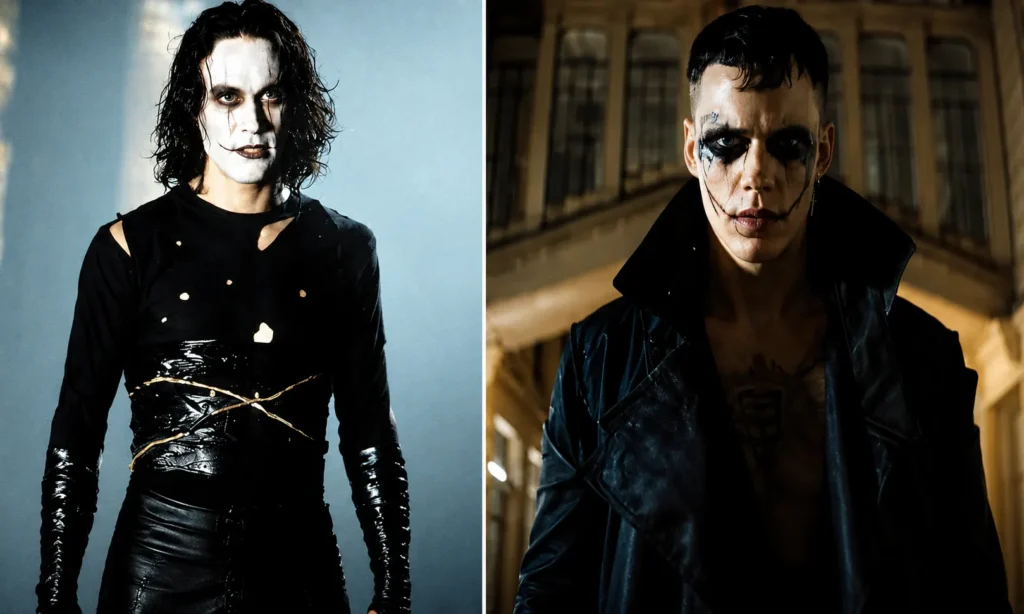
Stunt coordinator Jeff Imada helped shape a fighting style built around dynamic, aerobic movement, and Brandon reportedly dieted and trained on a stairmaster to fit the lean, brooding look of the character. Filming took place at Carolco Studios in Wilmington, North Carolina, with production already marked by several crew mishaps before the fatal incident.
How Did Brandon Lee Die?
On March 31, 1993, during a scene requiring a gun to be fired at close range, a prop revolver, a Smith & Wesson Model 629 chambered for .44 Magnum blanks, discharged unexpectedly. A dummy round used earlier had left a bullet fragment lodged in the barrel; when a blank cartridge was fired for the scene, that fragment was propelled out with lethal velocity.
Brandon was struck in the abdomen, with the fragment lodging near his spine. He was rushed to New Hanover Regional Medical Center, where surgeons operated for roughly six hours, but the internal injuries and blood loss were too severe. He died the same day at age 28, just weeks before he was due to marry his fiancée, Eliza Hutton.
Investigators ruled the death accidental, the result of improperly prepared dummy cartridges and a failure to check the barrel before filming resumed. No one was ever criminally charged, though Linda Lee Cadwell later sued the production and reportedly reached an undisclosed settlement within about two months.
Aftermath and Completion of The Crow
With roughly eight days of filming still remaining, the studio faced a difficult decision: shelve the project or find a way to finish it respectfully. Stunt doubles Chad Stahelski and Jeff Cadiente stepped in, and early CGI face-replacement techniques were used to complete Brandon’s remaining scenes using outtakes and previously shot footage.
The Crow was released in 1994, dedicated to Brandon Lee and Eliza Hutton. It opened at #1 in the U.S. with a $50.7 million domestic gross against a $23 million budget, and went on to become a genuine cult classic, holding strong marks from critics, including a notable score on Metacritic.
Brandon was buried at Lake View Cemetery in Seattle, beside his father, in a moment that added painful symmetry to a family already defined by an early loss. The parallel of a father and son both dying young, tied to careers built on physical performance, became a recurring theme in coverage of his legacy.
Martial Arts Training and Style
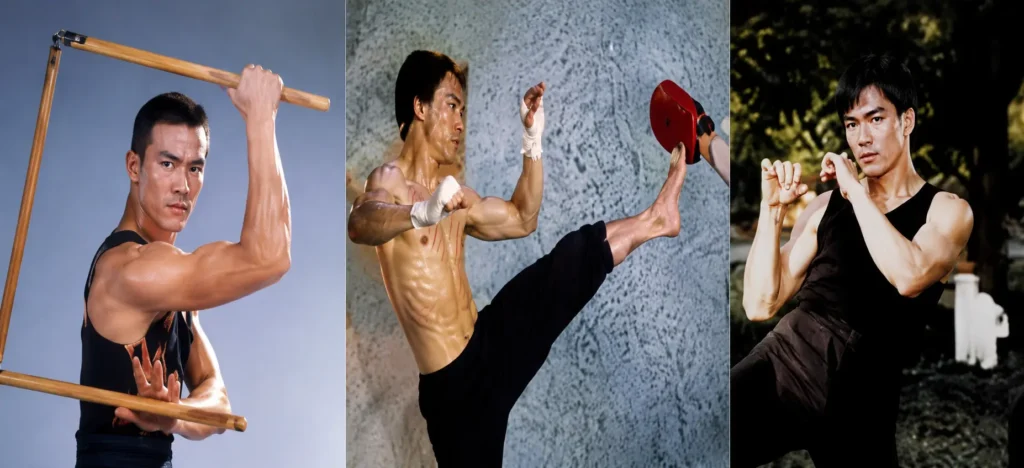
Brandon Lee trained extensively in Jeet Kune Do, his father’s own martial art, but he didn’t stop there. Under Dan Inosanto, he also studied Kali and Escrima, Filipino martial arts built around weapons and rapid-fire striking, which broadened his physical vocabulary well beyond his father’s system.
He trained with Richard Bustillo in Yee Chuan Tao, a relaxation-based approach to combat, and became certified through the Thai Boxing Association in 1991. In a 1992 interview with biographer John Little, Brandon described martial arts as a path to self-knowledge, framing his training as confronting personal limitations rather than chasing his father’s reputation.
This combination of disciplines gave him a fluid, aggressive screen presence that action choreographers noticed. It’s part of why Rapid Fire and The Crow still hold up as physical performances, even decades later.
Personal Life and Relationships
Brandon Lee kept a tight circle of close friends within the industry, including George Clooney, who has spoken about their friendship over the years. He also grew up alongside Chuck Norris’s son, Eric Norris, through a shared connection to the Inosanto Academy, where training partners often became lifelong friends.
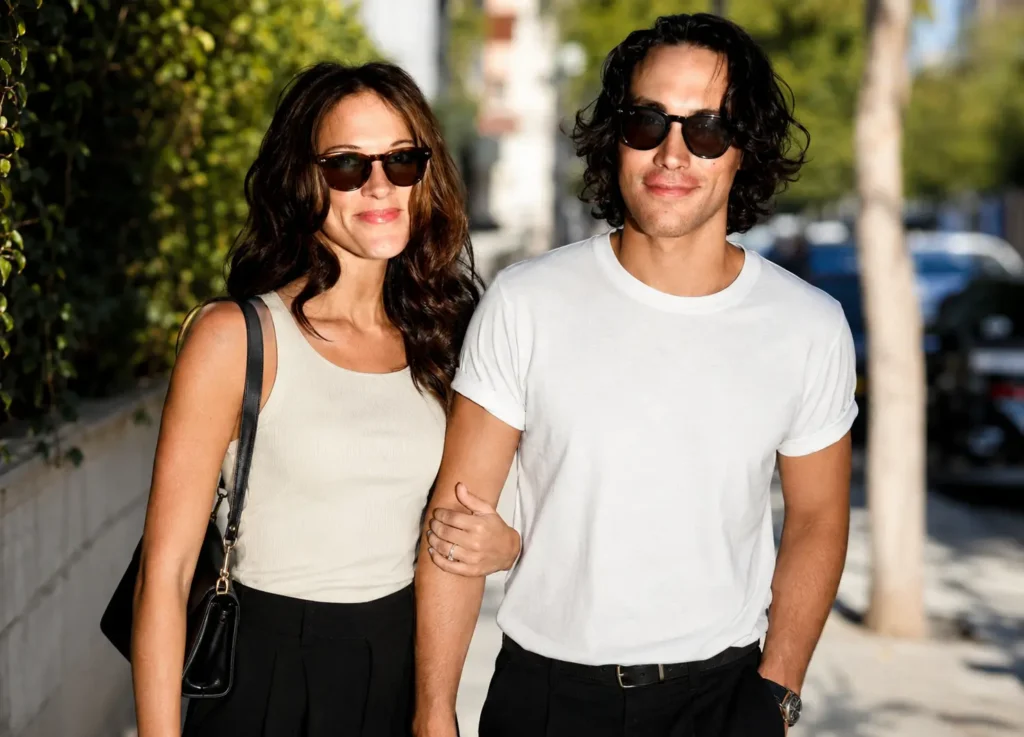
He met Eliza Hutton in 1990 on the set of a Renny Harlin project, and the couple became engaged in October 1992. Their wedding was planned for April 17, 1993, in Ensenada, Mexico, just over two weeks after his death, a detail that made the loss feel especially cruel to those close to him.
Ancestry and Family Background
Brandon Lee’s heritage was more layered than many fans realize. Through his father, his paternal great-grandfather was Ho Kom-Tong, whose half-brother, Sir Robert Ho Tung, was a prominent philanthropist in Hong Kong. Through his mother, Linda Emery, he carried Swedish and German ancestry as well.
This mixed background sometimes surprised people who expected Bruce Lee’s son to look purely Chinese; family accounts have noted lighter hair and eye coloring in Brandon compared to his father, a reflection of his mother’s European lineage blending with his father’s.
The Shang-Chi Connection That Never Happened
Long before Marvel’s Shang-Chi reached the screen, there were early attempts to develop the character for television and film. Producer Margaret Loesch, working with Stan Lee between 1984 and 1990, reportedly considered adaptations of the character, and Brandon Lee’s name has been associated with early interest in the role. The project never materialized during his lifetime.
Brandon Lee’s Death and the Rust Shooting Parallel
Nearly three decades later, the 2021 shooting on the set of Rust, involving Alec Baldwin and cinematographer Halyna Hutchins, drew immediate comparisons to Brandon Lee’s death. Both cases centered on a firearm that should have been safe, misloaded or mishandled by crew, discharging live ammunition or a lethal fragment during filming.
Legal scholars, including Nancy Gertner of Harvard and Robert Weisberg of Stanford, have weighed in on how prosecutorial reasoning differs between the two cases, noting that proving criminal negligence in on-set shootings remains difficult even with modern scrutiny. Brandon’s sister, Shannon Lee, publicly renewed calls for mandatory gun-safety training on film sets following the Rust incident.
In 2022, the Crow reboot reportedly moved to ban real guns from its set entirely, a direct nod to the accident that ended Brandon Lee’s life and a sign of how much industry safety standards have shifted since 1993.
Legacy and Cultural Impact
Brandon Lee’s story is often framed as one of unfinished promise. As an American-born martial arts star of Asian ancestry, he was building genuine box-office momentum independent of his father’s name when his career was cut short. The Crow gave him a posthumous breakthrough that ironically became his defining role.
Critics at the time, including Roger Ebert, noted the eerie fit between the film’s brooding tone and the real tragedy behind it, calling it an unintentional epitaph. Decades later, Brandon Lee is remembered not just for how he died, but for the physicality, screen presence, and stunt-double techniques used to complete his final film, which helped normalize digital effects solutions for future productions facing similar crises.
Frequently Asked Questions
How did Brandon Lee die?
Brandon Lee died on March 31, 1993, after a prop gun discharged a bullet fragment during filming of The Crow. The fragment, left in the barrel from an earlier dummy round, struck him in the abdomen. He died hours later despite six hours of surgery.
Was Brandon Lee’s death intentional?
No. Investigators ruled it an accident caused by improperly prepared dummy cartridges and a failure to inspect the gun barrel before filming. No criminal charges were ever filed against the production crew.
How old was Brandon Lee when he died?
Brandon Lee was 28 years old at the time of his death, just weeks before his planned wedding to fiancée Eliza Hutton.
What movie was Brandon Lee filming when he died?
He was filming The Crow, playing Eric Draven. The film was completed using stunt doubles and early CGI face-replacement techniques and was released in 1994 to strong reviews and box-office success.
Is Brandon Lee related to Bruce Lee?
Yes. Brandon Lee was the son of martial arts legend Bruce Lee and actress Linda Lee Cadwell, and the elder brother of Shannon Lee.
Did Brandon Lee finish filming The Crow?
Not entirely. About eight days of filming remained when he died. The production used stunt doubles Chad Stahelski and Jeff Cadiente along with digital face-replacement effects to complete his remaining scenes.
How does Brandon Lee’s death compare to the Rust shooting?
Both involved a firearm believed to be safe discharging a lethal projectile on set due to crew errors in ammunition handling. The Rust case in 2021 renewed public debate about gun safety protocols, drawing direct comparisons to Brandon Lee’s 1993 death.
Read About : birgundi baker