
Jacqueline Kennedy was more than the wife of a president. She was a photographer, an editor, a preservationist, and the woman who taught a grieving nation how to mourn. From her privileged but troubled childhood to her quiet final years in New York, Jackie Kennedy’s life holds lessons in resilience, taste, and purpose that still feel relevant today.
| Field | Details |
|---|---|
| Full Name | Jacqueline Lee Bouvier Kennedy Onassis |
| Nickname | Jackie, Jackie O |
| Date of Birth | July 28, 1929 |
| Place of Birth | Southampton, New York, USA |
| Date of Death | May 19, 1994 |
| Age | 64 (at the time of death) |
| Nationality | American |
| Zodiac Sign | Leo |
| Religion | Roman Catholic |
| Ethnicity | French, Irish and English descent |
| Profession/Occupation | Photographer, journalist, First Lady, book editor |
| Years Active | 1951–1994 |
| Education | Vassar College; Sorbonne (Paris); BA in French Literature, George Washington University |
| Genre/Field | Journalism, publishing, historic preservation, arts and culture |
| Spouse/Partner | John F. Kennedy (1953–1963); Aristotle Onassis (1968–1975); companion Maurice Tempelsman |
| Children | Arabella (stillborn), Caroline, John Jr., Patrick |
| Parents | John Vernou Bouvier III and Janet Norton Lee |
| Siblings | Lee Radziwill (sister); half-siblings Janet Jr. and James Auchincloss; several step-siblings |
| Net Worth | Estate widely reported at around $43 million at death |
| Height | 5 ft 7 in (170 cm) |
| Eye Color | Brown |
| Hair Color | Dark brown |
| Notable Works | White House restoration, “Inquiring Camera Girl” column, nearly 100 edited books at Doubleday |
| Awards/Honors | Honorary Emmy (Trustees Award, 1962) |
Early Life and Family Background
Jacqueline Lee Bouvier was born on July 28, 1929, at Southampton Hospital on Long Island. Her father, John Vernou Bouvier III, was a Wall Street stockbroker nicknamed “Black Jack.” Her mother, Janet Lee, was a determined socialite. Jackie was the elder of two daughters; her younger sister Caroline Lee arrived in 1933.
The Bouviers liked to stress their French Catholic descent, though the family line was largely English and Irish Catholic as well. Jackie split her childhood between a New York City apartment and summers at the family’s East Hampton estate. She was bright, artistic, and a little mischievous, and she was openly her father’s favorite.
Behind the glamour sat an unstable home life. Black Jack drank, gambled, and was unfaithful, and money problems followed. Her parents separated in 1936, and Janet secured a Reno divorce finalized in 1940. Jackie, still a child, learned early to keep her feelings private, a habit she never lost.
In 1942, her mother married Hugh D. Auchincloss, a wealthy Standard Oil heir. The move brought Jackie to Merrywood, his estate in McLean, Virginia, and summers at Hammersmith Farm in Newport, Rhode Island. She gained a stepbrother, Hugh “Yusha” Auchincloss, other step-siblings, and later two half-siblings, Janet and James.
When I look at her story, this period explains so much. A girl who loved poetry, drawing, and reading Gone with the Wind found security in books and imagination. That inner world later shaped the polished, guarded public figure Americans came to know.
A Lifelong Love of Horses
Horses were Jackie’s first true passion. She started riding as a toddler on a pony named Tex, and by her early years she was a skilled equestrienne. Riding gave her confidence and a sense of control that her home life rarely offered.
In 1940, at age 11, she won a national junior horsemanship competition. The New York Times noted her double win, an early taste of press attention. She collected national championship medals and kept competing through her teenage years.
Her love of riding never faded, even in the White House. The Kennedys rented Glen Ora in Virginia horse country and later built Wexford nearby for weekend escapes. Jackie rode with the hunt there and taught both Caroline and John Jr. to ride, despite JFK’s horsehair allergy.
One of her favorite horses came from Pakistan. During her 1962 tour, Pakistan’s President Ayub Khan gave her a bay gelding named Sardar. She treasured him for years, and he became a symbol of how personal gifts could strengthen ties between nations.
Education and Her Life-Changing Year in Paris
Jackie attended Miss Chapin’s School in New York, then Holton-Arms in Washington. In 1944 she moved to Miss Porter’s School in Farmington, Connecticut, an elite boarding school. She excelled in literature, history, and art, and her yearbook declared she would never become a housewife.
In 1947 she enrolled at Vassar College, where she studied history, literature, and art. That same year, a society columnist named her “Debutante of the Year.” Jackie found the label embarrassing, and she felt Vassar was too far from the world she wanted to explore.
Her turning point came in 1949. Through the Smith College junior year program, she studied first in Grenoble and then at the Sorbonne in Paris. She lived with a widowed countess who had served in the French Resistance, and she later called this her favorite year.
Paris changed her. She became fluent in French, improved her Spanish and Italian, and immersed herself in museums, ballet, and literature. She also traveled widely around Europe, absorbing a sense of culture and history that she would later bring to the White House.
Rather than return to Vassar, she transferred to George Washington University. She graduated in 1951 with a BA in French literature. It was a practical choice that kept her close to her family in Virginia while she weighed her next step.
From Vogue Prize to “Inquiring Camera Girl”
In her senior year, Jackie entered Vogue’s Prix de Paris essay contest and won against a huge national field of college seniors. The prize was a junior editor job, six months in New York and six months in Paris. Under pressure from her mother, she turned it down.
That summer of 1951, she toured Europe with her sister Lee. The two later published their illustrated diary of the trip as a book. Back home, her stepfather helped her land a clerk job at the Washington Times-Herald, where she soon moved into the newsroom.
She became the paper’s “Inquiring Camera Girl,” a reporter-photographer who stopped Washington residents with witty questions and photographed them. The column ran from late 1951 into 1953 and eventually carried her byline. She interviewed everyday people, children from political families, and politicians, including Richard Nixon and a young senator named John F. Kennedy.
Her biggest assignments came in 1953. She covered Eisenhower’s inauguration and then traveled to London for Queen Elizabeth II’s coronation. Her dispatches showed a sharp eye for detail and an ease with people that she would use for the rest of her public life.
Honestly, I think this chapter is the most underrated part of her biography. Long before she was a style icon, she was a working journalist who knew how to ask questions and frame a story.
Meeting and Marrying John F. Kennedy
Jackie met John F. Kennedy through journalist Charles Bartlett and his wife Martha, who invited them to a Washington dinner party. Their romance moved slowly. Before it took off, she briefly became engaged to stockbroker John Husted in December 1951, then ended it a few months later.
JFK won his Senate seat in 1952, and the couple dated quietly around his campaign schedule. According to Georgetown legend, he proposed in a booth at Martin’s Tavern. She helped him with his work, translating ten French books on French Indochina and Vietnam for him.
Their engagement was announced in June 1953, just after she returned from the coronation. The Kennedy family managed the news like a political campaign. Jackie sensed even then that marrying JFK meant marrying national attention.
The wedding took place on September 12, 1953, at St. Mary’s Catholic Church in Newport. More than a thousand guests attended the reception at Hammersmith Farm, making it the wedding of the season. Her father, drunk that day, did not walk her down the aisle; her stepfather did.
Her ivory silk gown was designed by Ann Lowe, an African American designer who received little credit at the time. The couple honeymooned in Acapulco. Soon after, Jackie helped edit and research what became Profiles in Courage, which won JFK a Pulitzer Prize in 1957.
Jackie Kennedy’s Children, Early Marriage and Heartbreaking Losses
The early marriage was harder than the wedding photos suggested. In 1954 JFK underwent near-fatal spinal surgery, and Jackie nursed him through a long recovery. She also faced his infidelity, which strained the marriage and contributed to her bouts of depression.
Pregnancy brought both joy and grief. She suffered a miscarriage in 1955, then delivered a stillborn daughter, Arabella, in 1956. Her father died the following year. These losses came while she was still in her twenties and largely out of public view.
| Child | Born | Notes |
|---|---|---|
| Arabella | August 1956 | Stillborn daughter |
| Caroline Bouvier Kennedy | November 27, 1957 | Lawyer, author, later U.S. ambassador to Japan and Australia |
| John F. Kennedy Jr. | November 25, 1960 | Born weeks after the 1960 election; died in a 1999 plane crash |
| Patrick Bouvier Kennedy | August 7, 1963 | Born five weeks early at Otis Air Force Base; lived two days |
The family first lived at Hickory Hill in Virginia, later sold to Robert Kennedy, and then in a Georgetown townhouse. Caroline’s arrival gave the couple a new closeness, and Jackie threw herself into motherhood with real devotion.
The loss of Patrick in August 1963 hit both parents hard. Many historians believe it brought Jackie and JFK closer than ever. Her trip to Dallas a few months later was her first big public outing since his death.
Years later, tragedy struck again. In 1999, John Jr. died in a plane crash with his wife, Carolyn Bessette-Kennedy, and her sister, Lauren Bessette. Jackie, by then gone five years, was spared that grief.
Her Role in JFK’s Political Campaigns
Jackie was shy and disliked rallies, but she became an invaluable asset to JFK’s campaigns. During his 1958 Senate race, crowd sizes noticeably grew when she joined him on the trail. Advisers quickly realized she drew public fascination on her own.
In 1960, she was pregnant with John Jr. and placed on bed rest because the pregnancy was high-risk. Instead of stepping back, she campaigned from home. She answered letters, gave interviews, and taped ads, including some in Spanish to reach Latino voters.
She also wrote a weekly syndicated column called “Campaign Wife.” It gave readers a personal window into the race and helped soften criticism that she was too elegant and too distant. Historians like Arthur Schlesinger later praised her sharp judgment of people.
Her style itself became a campaign tool. Her wardrobe and poise set her apart from earlier political wives and appealed to younger voters. By election day, she was already one of the most talked-about women in America.
First Lady Years and the White House Restoration
Jackie became First Lady in January 1961 at age 31, the third-youngest in history and the first born in the 20th century. She was the youngest First Lady in about 80 years. Her signature cause was clear from the start: restoring the White House.
She was shocked by the bland furniture left from the Truman renovation. She wanted the building to feel like the people’s house and a museum of American history. Within weeks, she formed a Fine Arts Committee and hired the first White House curator.
Because she refused to use public money, the project relied on private funds and donations. She tracked down antiques, paintings, and historic objects, including pieces tied to Madison and Lincoln. She found the Resolute desk, a gift from Queen Victoria to President Hayes in 1880, and placed it in the Oval Office.
To protect the work, she pushed for a 1961 law making furnishings White House property. She also founded the White House Historical Association (WHHA), whose guidebook sold hundreds of thousands of copies in its early run. That guidebook still funds acquisitions today.
Her preservation instinct went beyond the mansion. She helped save the historic buildings around Lafayette Square, including Decatur House, and championed a national cultural center that later became the Kennedy Center. She even opened a small preschool in the family quarters for Caroline and her friends.
The Televised White House Tour
On February 14, 1962, CBS aired “A Tour of the White House with Mrs. John F. Kennedy.” About 56 million viewers watched the first broadcast, and around 80 million saw it in total. It was a landmark moment for television and for public interest in history.
Jackie guided viewers room by room, explaining the stories behind the furniture and art. Her soft voice and deep knowledge surprised many viewers. The tour earned her an honorary Emmy, making her the first First Lady to receive one.
Cultural Diplomacy and Foreign Travel
Jackie believed the arts could define a nation. She turned state dinners into showcases for American performers, musicians, writers, and scientists. Artists like cellist Pablo Casals and violinist Isaac Stern performed at the White House, raising its cultural profile worldwide.
Her greatest diplomatic triumph came in Paris in May 1961. Her fluent French charmed President de Gaulle, and crowds turned out for her more than for JFK. He joked that he was the man who accompanied Jacqueline Kennedy to Paris.
She became one of the most traveled First Ladies of her era. In 1962 she toured India and Pakistan with her sister Lee, and she later traveled to Greece and Italy. Her ability to speak several languages gave her real influence in foreign capitals.
Her global appeal made her a quiet diplomatic asset, even during tense periods like the Cuban Missile Crisis, when she chose to stay in Washington with her children. Later, she served as an honorary head of fundraising for the national cultural center she had championed.
Jackie Kennedy’s Style and Fashion Legacy
Jackie Kennedy’s style shaped fashion across the 1960s and beyond. She favored clean lines, A-line dresses, tailored coats, simple suits, and the pillbox hat. Later, big sunglasses became part of her signature look in New York.
She worked closely with designer Oleg Cassini, who created much of her wardrobe as First Lady. She also wore French couture, which drew spending criticism. Still, women everywhere copied her outfits, and she regularly topped best-dressed lists.
Her inaugural gown and cape, designed with input from Bergdorf Goodman, now belong to the Smithsonian. The JFK Library also preserves many of her clothes and accessories. Few public figures of the 20th century have had such a lasting impact on style.
What I find most interesting is how deliberate her choices were. She used fashion as a form of communication, presenting America as modern, confident, and refined. Her look was elegant, but it always served a purpose.
The Assassination of JFK and the Birth of Camelot
On November 22, 1963, JFK was shot while riding with Jackie in an open Lincoln Continental convertible through Dealey Plaza in Dallas. Lee Harvey Oswald was charged with the killing. The president was rushed to Parkland Hospital, but he could not be saved.
Jackie, widowed at 34, refused to change out of her blood-stained pink Chanel-style suit. She stood beside LBJ as he took the oath of office aboard Air Force One. She wanted the world to see what had been done to her husband.
A week later, she gave an interview to journalist Theodore White for Life magazine. She compared the Kennedy years to “Camelot,” the musical JFK loved. The phrase stuck, and the Camelot myth became a lasting part of how Americans remember his presidency.
Planning a Funeral for the Nation
Jackie personally shaped the funeral, using Lincoln’s funeral as a model. JFK’s coffin lay in the East Room and then on the Lincoln catafalque in the Capitol, where about 250,000 people filed past. She walked behind the casket to St. Matthew’s Cathedral on November 25, 1963.
At the burial in Arlington, she lit an eternal flame. The most remembered image came from John Jr., who saluted his father’s coffin on his third birthday. Her composure made her a national symbol of dignity in grief.
In 1967 JFK was reburied in a permanent grave, along with Arabella and Patrick. Jackie also devoted years to the JFK Library, choosing architect I.M. Pei to design it. Her focus now turned to protecting her children’s safety and privacy.
Marriage to Aristotle Onassis: The “Jackie O” Era
After Robert Kennedy’s assassination in 1968, Jackie feared for her children. She told friends that if they were killing Kennedys, her children were targets. Within months, she made a decision that shocked the world.
On October 20, 1968, she married Greek shipping magnate Aristotle Onassis on his private island of Skorpios. He was 23 years older and one of the richest men in the world. The press quickly nicknamed her “Jackie O.”
Public reaction was harsh. Many Americans felt betrayed and saw the marriage as a gold-digger move that dishonored JFK’s memory. In truth, the union offered physical security, financial security, and an escape from the paparazzi that hounded her in the United States.
The marriage soon became more of an arrangement. Onassis kept up his relationship with opera singer Maria Callas, and the couple often lived apart between Paris, Greece, and New York. His son Alexander’s death in 1973 broke him, and his own health declined quickly.
Onassis died on March 15, 1975. His daughter, Christina, contested Jackie’s estate claim, and the matter ended in a settlement of about $26 million. Jackie was finally free to build a life entirely on her own terms.
A Second Career in Book Publishing
In September 1975, Jackie took a job as a consulting editor at Viking Press. Many people doubted she would last. She proved them wrong and spent nearly two decades as a working editor in New York.
She resigned from Viking in 1977 after the company published a Jeffrey Archer novel built around a plot to kill a future president Ted Kennedy. In February 1978 she joined Doubleday, where she eventually became a senior editor.
Over 19 years in publishing, she worked on nearly 100 books. Her taste ranged from dance and fashion to history and fiction. Some of her notable projects include:
| Book or Project | Why It Mattered |
|---|---|
| Cairo Trilogy (Naguib Mahfouz) | Helped bring the Nobel laureate’s work to English readers |
| The Wedding (Dorothy West) | Encouraged the Harlem Renaissance writer to finish her final novel |
| Dancing on My Grave (Gelsey Kirkland) | Candid memoir from a ballet star |
| Allure (Diana Vreeland) | Celebrated book by the legendary fashion editor |
| Carly Simon’s children’s books | Collaboration with the singer-songwriter |
Colleagues described her as hardworking, curious, and humble. She shared office space, made her own coffee, and cared deeply about her authors. For me, this career reveals the real Jackie more than any photo from the White House years.
Saving Grand Central and New York’s Landmarks
In the 1970s, Jackie became one of New York’s most powerful preservation voices. When developers planned a tower over Grand Central Terminal, she joined the campaign to stop it. Her involvement brought national attention to the fight.
The battle went all the way to the U.S. Supreme Court, which in 1978 upheld New York’s landmark protection laws. Today a plaque in the Grand Central foyer honors her role. The ruling protected New York landmarks for generations.
She stayed active in the 1980s, opposing a massive Columbus Circle tower that would have shadowed Central Park. She also supported preservation campaigns beyond the city, including Olana, the Hudson River home of painter Frederic Church.
Her public admiration only grew in these years. She received honors such as the Fine Arts Federation medal and later supported Bill Clinton and Hillary Clinton, whom she quietly advised on raising children in the White House.
Later Life With Maurice Tempelsman
In her final years, Jackie shared her life with Maurice Tempelsman, a Belgian-American businessman and diamond dealer. They met through business circles and grew close in the 1980s. He eventually moved into her 15th-floor apartment at 1040 Fifth Avenue.
Friends described it as an equal relationship, perhaps the most balanced of her life. Tempelsman managed her finances wisely and grew her wealth. He was also calm, private, and fiercely loyal, qualities she valued deeply.
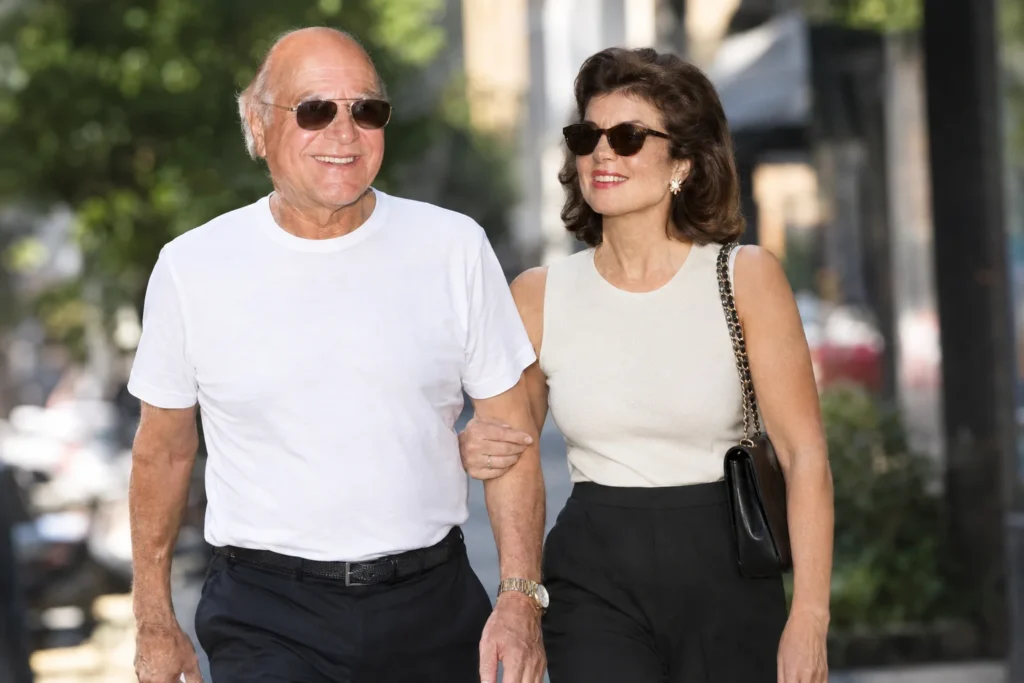
These were happy years in many ways. Caroline married Ed Schlossberg in 1986, and grandchildren followed. Jackie spent time at her Martha’s Vineyard home, rode horses in Virginia, and enjoyed a life with far less public pressure.
Her mother died in 1989 after years with Alzheimer’s disease. Jackie cared for her quietly, as she did with most personal struggles.
How Did Jackie Kennedy Die?
Jackie Kennedy died of non-Hodgkin lymphoma, a cancer of the lymphatic system. In November 1993 she was thrown from a horse during a hunt in Virginia. Around that time, doctors found a swollen lymph node, and tests followed.
She was diagnosed in January 1994 and began chemotherapy. The cancer spread to her spine and brain within months. In May, after a final hospital stay, she learned her illness was terminal and chose to return home.
She died at her New York apartment on May 19, 1994, at age 64, with her children nearby. Before her death, she reportedly burned some personal letters to protect her privacy.
Her funeral Mass took place at St. Ignatius Loyola, the church where she had been baptized and confirmed. On May 23, she was buried at Arlington beside JFK, Arabella, and Patrick. President Clinton gave the eulogy at the burial service.
Jacqueline Kennedy’s Net Worth
At the time of her death, Jacqueline Kennedy Onassis’s estate was widely reported at around $43 million. Much of that wealth came from the Onassis settlement, which Maurice Tempelsman invested carefully over nearly two decades.
Her assets included the Fifth Avenue apartment, Red Gate Farm on Martha’s Vineyard, art, jewelry, and personal belongings. Her will set up trusts for her children and charitable foundations.
In 1996, a Sotheby’s auction of her belongings drew global attention and raised over $34 million. Items like her faux pearls and JFK’s golf clubs sold for many times their estimates, proving that her name alone carried immense value.
The Private Side: Wit, Habits and Hard Truths
Behind the poise, Jackie was funny. Friends and staff described a sharp, wicked sense of humor and a talent for spotting the absurd. White House photographers knew she would carefully manage her image, yet in private she laughed easily.
She was also a lifelong chain-smoker, a habit she hid carefully from cameras. After 1963, she reportedly drank heavily at times and battled depression. Some historians now discuss her grief through the lens of PTSD, especially after JFK’s death and RFK’s death five years later.
Her marriage to JFK carried painful truths. He was a known womanizer, and his affairs, including one widely linked to artist Mary Meyer, hurt her deeply. A 1952 letter and other private writings show she entered marriage with clear expectations about the Kennedy world.
Biographers often describe her as having public, private, and secret sides. Historian Katherine Jellison and others note how carefully she separated those lives. That control, learned in childhood, protected her but also kept her isolated during her hardest years.
Why Jacqueline Kennedy’s Legacy Still Matters
Jackie Kennedy remains one of the most popular First Ladies in American history. For decades, she appeared on lists of the most admired women in the world. Her influence reached politics, fashion, publishing, and preservation.
She gave the White House a youthful makeover in the post-war era while honoring America’s cultural heritage. Historian Douglas Brinkley and others credit her with redefining the role of First Lady. She is still the most copied First Lady in fashion and design.
Her legacy also lives in how she handled loss. She turned private tragedy into a public lesson in dignity. The Camelot story she shaped continues to influence how Americans remember the early 1960s.
Most importantly, she showed that a public woman could reinvent herself. Journalist, First Lady, widow, editor, and activist, she never let one role define her completely.
Places to Visit in Jackie’s Footsteps
Many places tied to Jackie’s life are open to the public, while others are private homes you can only view from outside. Here are the most meaningful stops:
- JFK Library and Museum, Boston, Massachusetts: Houses her clothes, papers, and exhibits on the White House years.
- JFK Hyannis Museum and the Kennedy Compound area, Hyannis Port: Explore the family’s summer world on Cape Cod.
- The Sixth Floor Museum at Dealey Plaza, Dallas: Covers the assassination in detail.
- Smithsonian National Museum of American History, Washington, DC: Displays her inaugural gown in the First Ladies collection.
- Martin’s Tavern, Georgetown: The booth where JFK is said to have proposed is still marked.
- Decatur House, Lafayette Square: A marker honors her role in saving the square.
- St. Mary’s Church, Newport: The site of her wedding; nearby Hammersmith Farm is private.
- Grand Central Terminal, NYC: Look for her plaque in the main foyer.
- Jacqueline Kennedy Onassis Reservoir, Central Park: Renamed in her honor in 1994.
- St. Ignatius Loyola, NYC: Where her funeral Mass was held.
- Arlington National Cemetery, Virginia: Her final resting place.
Private homes like Merrywood, Lasata in East Hampton, Hickory Hill, Glen Ora, Wexford, 1040 Fifth Avenue, and Red Gate Farm can only be seen from public roads. Please respect their privacy if you visit.
Books, Films and Series to Learn More
If you want to go deeper into Jackie’s life, these are worth your time:
Nonfiction
- Jacqueline Kennedy: Historic Conversations on Life with John F. Kennedy — her 1964 interviews with Arthur Schlesinger
- Jackie: Public, Private, Secret by J. Randy Taraborrelli
- Camera Girl by Carl Sferrazza Anthony — focuses on her journalism years
- Designing Camelot — a detailed look at the White House restoration
- Reading Jackie by William Kuhn — explores her publishing career through the books she edited
- Jackie: The Clothes of Camelot — a visual guide to her style
Fiction
- Jacqueline in Paris by Ann Mah — imagines her year at the Sorbonne
- And They Called It Camelot by Stephanie Marie Thornton
- Jackie and Maria by Gill Paul — set around her marriage to Onassis
Screen
- Jackie (2016) — a film focused on the days after the assassination
- CNN’s First Ladies series
- C-SPAN’s First Ladies series
Visiting the Arlington Gravesite
The John F. Kennedy gravesite at Arlington National Cemetery is one of the most visited spots in the cemetery. Millions of visitors come to Arlington each year, and most stop here to see the eternal flame.
Jackie rests beside JFK under a simple granite marker. Arabella and Patrick lie on either side. Robert and Ted Kennedy are buried nearby. The design is quiet and symmetrical, reflecting the dignity she wanted.
Visitors can walk up from the main entrance or take the cemetery’s shuttle tour. Photos are allowed, but quiet and respect are expected. Early morning visits are usually calmer and offer better light for photographs.
Fast Facts About Jacqueline Kennedy
| Fact | Detail |
|---|---|
| Born | July 28, 1929, Southampton, NY |
| Died | May 19, 1994, NYC |
| Cause of Death | Non-Hodgkin lymphoma |
| Education | Vassar, Sorbonne, George Washington University (GWU) |
| Spouses | JFK (1953–1963); Aristotle Onassis (1968–1975) |
| First Lady | 1961–1963 |
| Burial | Arlington National Cemetery |
Frequently Asked Questions
Where is Jackie Kennedy’s pink suit today?
The pink suit she wore in Dallas is stored at the National Archives in Maryland. Under an agreement with Caroline Kennedy, it cannot be publicly displayed until 2103. It is kept in a climate-controlled vault, never cleaned, still bearing the stains from that day.
Did Jackie Kennedy have grandchildren?
Yes. Through Caroline and Ed Schlossberg, she had three grandchildren: Rose, Tatiana, and Jack Schlossberg. Jackie lived to see all three born and was known as a devoted grandmother. John Jr. had no children.
Why was Jacqueline Kennedy called Jackie O?
The nickname “Jackie O” came from the press after her 1968 marriage to Aristotle Onassis. It marked a new public identity separate from her years as First Lady. The name stuck and became shorthand for her glamorous international image.
Did Jackie Kennedy write any books herself?
Yes. She co-wrote One Special Summer with her sister Lee, a playful illustrated diary of their 1951 European trip, published in 1974. She also wrote introductions and helped shape many books during her editing career.
Did Jackie Kennedy keep Secret Service protection after JFK’s death?
Congress extended Secret Service protection to her and her children after the assassination. She lost her own protection when she married Aristotle Onassis in 1968, while Caroline and John Jr. remained covered until age 16.
What languages did Jacqueline Kennedy Onassis speak?
She spoke fluent French and also had a good command of Spanish and Italian. She used these skills during campaigns and foreign visits, which made her an effective cultural ambassador abroad.
Internal linking ke liye do natural spots: “White House restoration” wale section se apne First Ladies ya US presidents wale article ko link karein, aur “Grand Central” wale section se kisi New York landmarks ya travel guide wale article ko.
Read About : washington isaiah